
"Movement is life. Life is a process.
Improve the quality of the process and you improve the quality of life itself."
Moshe Feldenkrais
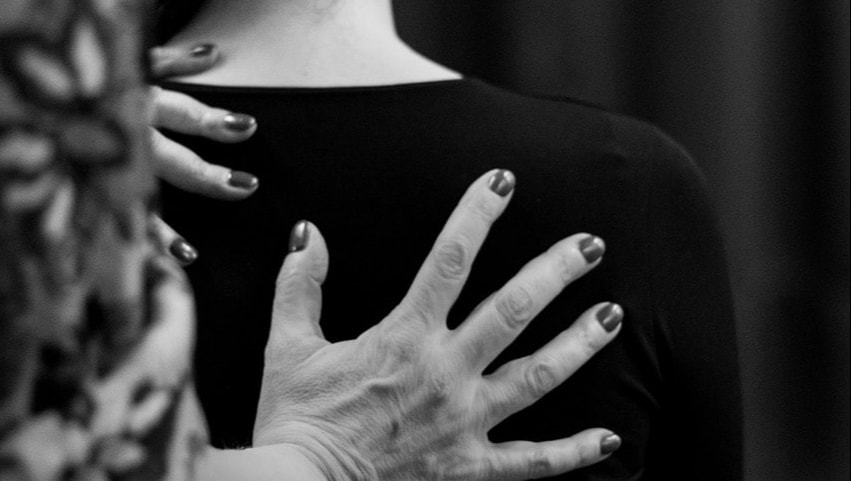
Foto: Shahed Staub
Feldenkrais in Basel
Would you like to move with greater ease and improve your quality of life? Would you like to find new resources to help you feel more fluid in your everyday life? Would you like to change your movement patterns, boost your confidence, and receive guidance on how to resume an activity or sport you had given up after an injury?
With the Feldenkrais Method, you are guided through words or gentle hands-on guidance to perceive yourself in a more differentiated way and to explore the range of your movement possibilities. The approach to movement is holistic: it engages your perception, your feelings, and your ideas.
As a certified Feldenkrais practitioner, I am recognized by health insurance providers. Please check with your supplementary insurance whether reimbursement is available. Feldenkrais lessons take place mainly in my studio in Basel.
The Feldenkrais Method is offered in group lessons (ATM: Awareness Through Movement) or in individual sessions (FI: Functional Integration). In the group lessons, you develop your body awareness and gently explore functional relationships through verbally guided movement tasks, expanding your movement patterns. In the individual sessions, you discover new movement possibilities through gentle hands-on guidance and deepen your body awareness. In this way, you gain greater ease and freedom in your movements.
Feldenkrais can be helpful for:
- discovering a playful sense of ease in movement
- developing new resources for greater resilience in everyday life
- improving concentration and learning ability
- reducing stress
- improving posture and breathing
- refining the effectiveness of movement
- people in the fields of dance, theatre, and music who wish to expand their artistic potential and creativity and fine-tune their expression and stage presence
- athletes who want to explore and enhance their performance
- preventing injuries and avoiding strain or misuse
- rehabilitation
- pain
- illness or restricted mobility
- psychological difficulties (as a complement to psychotherapy)
- increasing quality of life
- and much more